
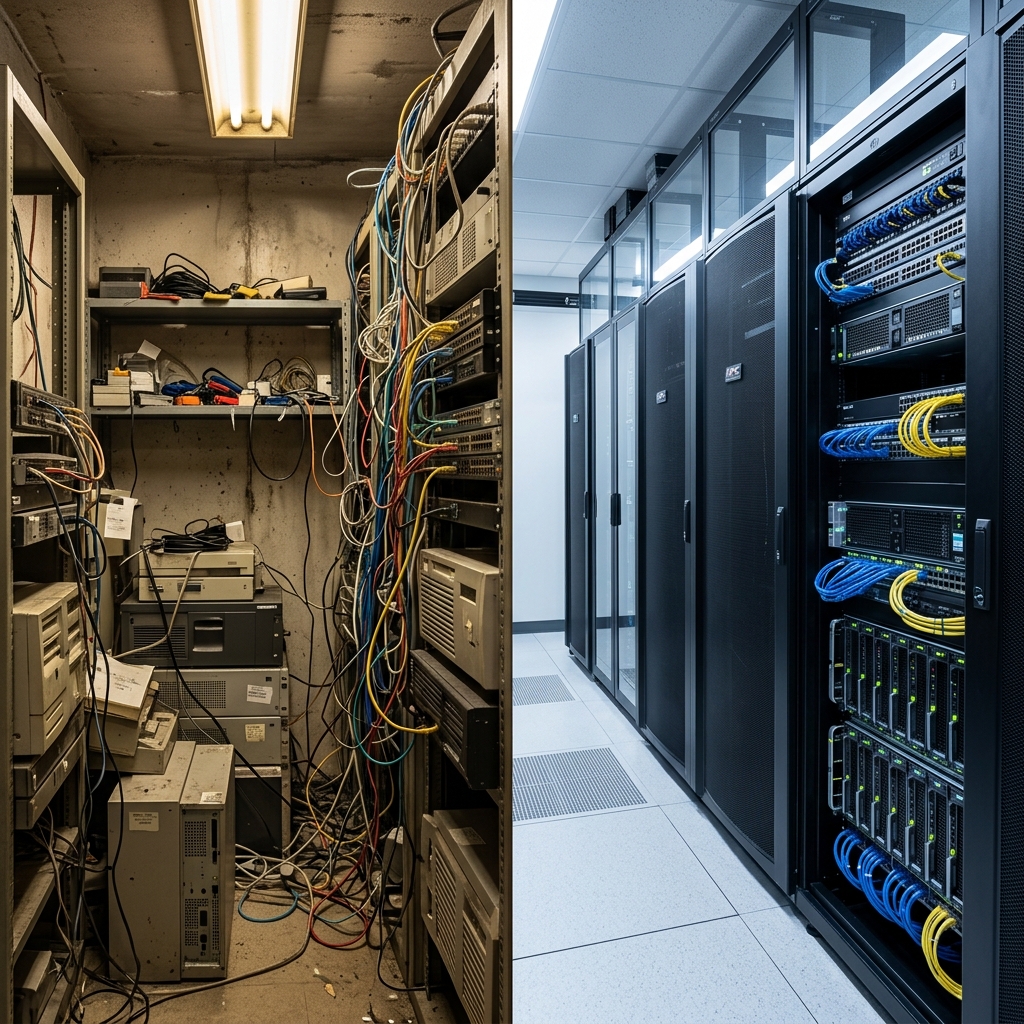
Across India, thousands of enterprises operate server rooms that were designed a decade or more ago for a fundamentally different computing environment. These facilities were built for low-density, primarily storage workloads - 2–4 kW per rack, basic air conditioning, and rudimentary monitoring. Today's requirements - AI inference, real-time analytics, cloud-hybrid architecture, and containerised microservices - demand 10–25 kW per rack, precision cooling, redundant power, and comprehensive monitoring.
The conventional wisdom is to abandon these facilities and migrate to commercial colocation or public cloud. But for many Indian enterprises, particularly in manufacturing, healthcare, BFSI, and government sectors, there are compelling reasons to modernise existing infrastructure rather than migrate: data sovereignty requirements, latency sensitivity for operational technology, regulatory constraints on data movement, and the simple economics of utilising real estate already owned.
The Five Signs Your Server Room Needs Immediate Modernisation
1. Thermal alarms are routine. If your cooling system regularly triggers high-temperature alerts, your facility has outgrown its thermal capacity. Running servers in overheated conditions accelerates hardware failure by 40–60%. 2. Power circuits are at capacity. If adding a new rack requires a new power feed, your electrical distribution cannot support growth. 3. Network cabling is ad-hoc. If your cable management has devolved into a tangled mass, troubleshooting and expansion become exponentially slower. 4. Single points of failure exist. If a single UPS, cooling unit, or network switch failure would cause a complete outage, your facility lacks the redundancy required for modern workloads. 5. No remote monitoring exists. If your team must be physically present to know whether systems are healthy, your operational model cannot scale.
The Modernisation Framework
Phase 1: Initial Audit (4–6 Weeks)
Before any modernisation work begins, a comprehensive audit is required: structural analysis of the building to determine whether floors can support high-density racks (modern racks can weigh 1,000+ kg), electrical capacity audit to determine available power and the cost of upgrading distribution, thermal simulation to model airflow patterns and identify where cooling interventions will have the most impact, and network topology review to plan structured cabling and fibre backbone upgrades.
Phase 2: Quick Wins (6–12 Weeks)
Immediate improvements that deliver results without major construction: implement hot aisle/cold aisle containment using curtains or panels, install blanking plates on all unused rack positions, seal cable cutouts and raised floor gaps to prevent bypass airflow, deploy environmental monitoring sensors at rack level, and consolidate underutilised servers through virtualisation to free rack space and reduce heat load.
Phase 3: Infrastructure Upgrade (3–6 Months)
Structural improvements: upgrade power distribution with modular UPS and intelligent PDUs, install precision cooling units (in-row cooling is highly effective for retrofit scenarios), deploy structured cabling with fibre backbone, implement N+1 redundancy for cooling and power, and install physical security - biometric access, CCTV, and environmental monitoring integration.
Phase 4: Operational Transformation (Ongoing)
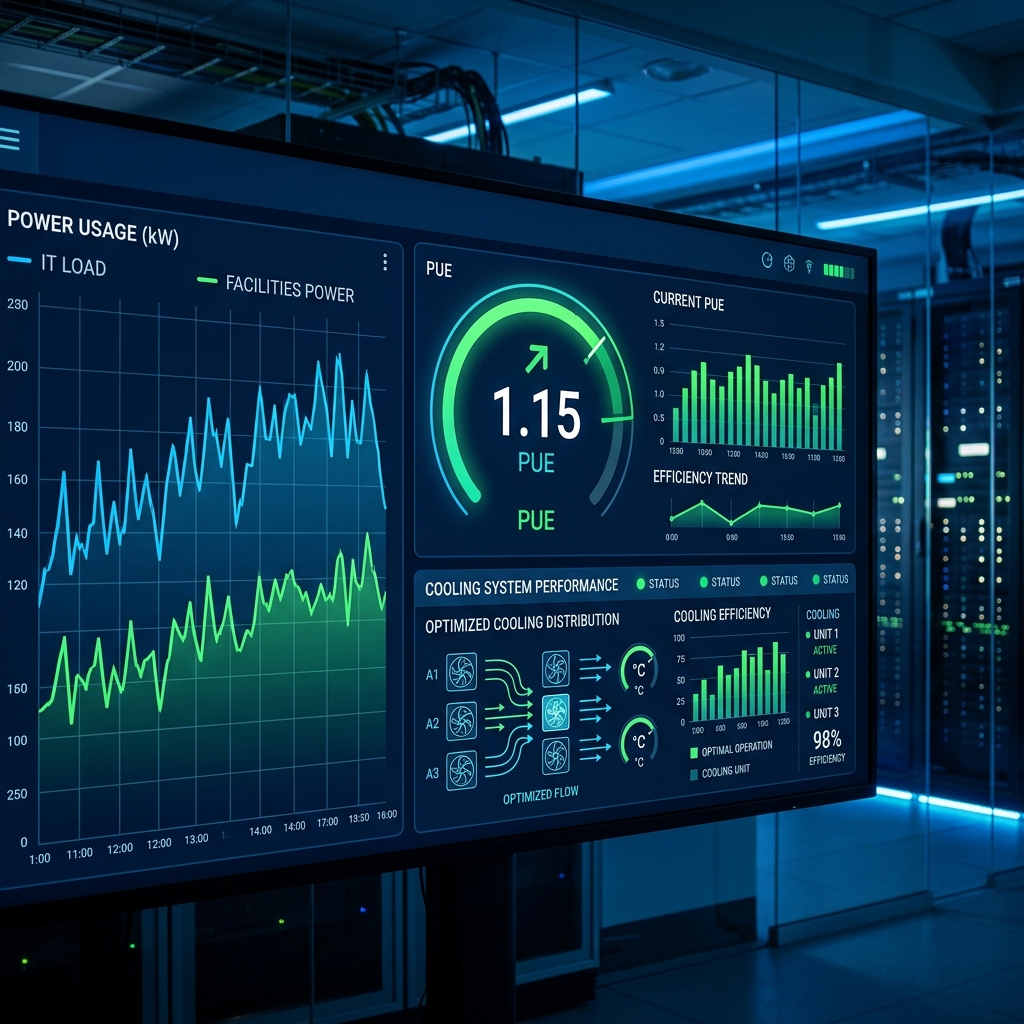
Modernise the operational model: deploy DCIM (Data Center Infrastructure Management) software for real-time visibility, implement change management procedures, create capacity planning processes, establish maintenance schedules for all critical infrastructure, and consider AIOps implementation for predictive maintenance.
Cost Comparison: Modernise vs. Migrate
For a typical 50–200 kW enterprise server room, modernisation costs typically range from ₹30 lakh to ₹2 crore depending on the scope of electrical and cooling upgrades required. Equivalent colocation capacity would cost ₹15–40 lakh per year in recurring fees - meaning modernisation often pays for itself within 2–4 years while retaining full control of the infrastructure.
The decision is not always straightforward. Facilities with severe structural limitations, inadequate power supply to the building, or workloads that genuinely benefit from public cloud elasticity may be better served by migration. Independent audit ensures this decision is made on technical merit, not vendor sales pressure.