
Cypraon
Private Limited
Cypraon
Private Limited
Independent, vendor-neutral consulting across the full data centre lifecycle - from site feasibility and design advisory through commissioning oversight and operational optimisation. We help you build, modernise, and operate facilities that deliver measurable returns.
4
Service Pillars
6
Lifecycle Phases
500kW–50MW
Facility Scale
The Market Opportunity
Cloud migration, AI workloads, digital governance mandates, and data localisation regulations are driving unprecedented demand for data centre capacity across India. The opportunity is massive - but so is the risk of getting it wrong.
Facilities built without rigorous feasibility analysis, independent design oversight, and structured operational planning face cost overruns, commissioning delays, and performance gaps that erode investor returns and client trust.
5×
India's DC capacity is projected to grow five-fold within the next decade, driven by cloud, AI, and digital infrastructure demand.
2,000+ MW
Estimated new DC capacity required in India over the next five years - a scale that demands rigorous planning.
35%+
Year-over-year growth in enterprise colocation and hyperscale demand across Tier-I and Tier-II Indian cities.
70%
Of new DC projects experience cost overruns or commissioning delays due to inadequate upfront feasibility and design governance.
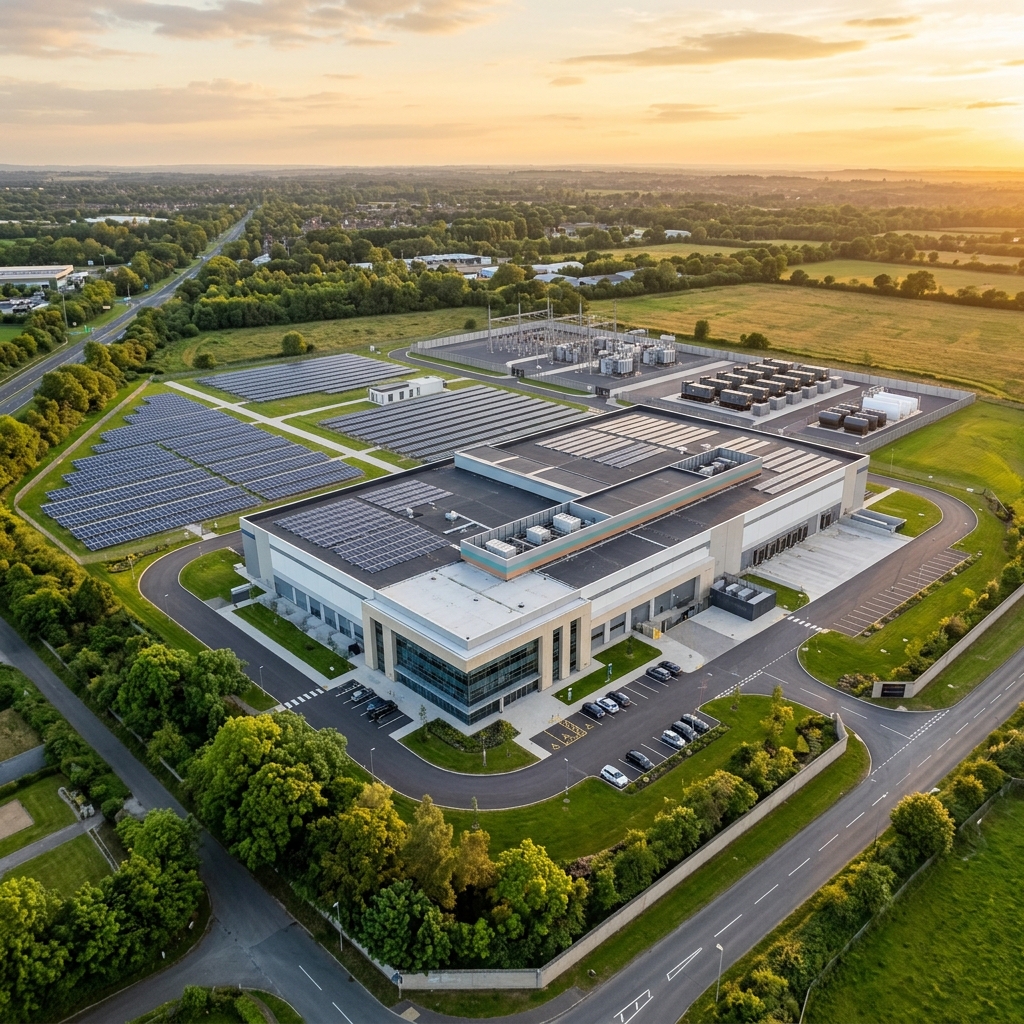
India requires 2,000+ MW of new DC capacity over the next five years - the question is not whether to build, but how to build right.
Why Independent Consulting Matters
These are not edge cases. They are the most common reasons data centre projects underperform - and they are all preventable with the right independent oversight before, during, and after construction.

Equipment vendors and EPC contractors recommend solutions that favour their own product lines. Without independent oversight, you end up with over-engineered infrastructure or vendor lock-in that limits future flexibility.
An independent DC consultant evaluates every vendor recommendation against your actual capacity plan, growth trajectory, and operational model - not against a sales target.
Cooling accounts for 30-40% of DC operating cost. Legacy air-cooling designs waste energy at scale. Many facilities are designed for average load, not peak - leading to thermal emergencies during demand spikes.
We model thermal dynamics for your specific facility, climate zone, and workload profile before any cooling decision is made.
Choosing a site based on land cost alone ignores power grid reliability, fibre latency, water availability for cooling, natural disaster exposure, and zoning restrictions - any of which can destroy the investment thesis.
Our geo-spatial feasibility analysis evaluates 15+ risk factors before you commit capital to a location.
Building a facility is one challenge. Operating it at target uptime is another. Teams that plan construction without parallel operational planning face months of post-commissioning instability.
We design the operational model - staffing, monitoring, maintenance protocols - alongside the physical design, not after it.
Investors and boards need measurable returns. Without pre-defined KPIs - PUE targets, capacity utilisation benchmarks, time-to-revenue timelines - a DC project becomes an opaque capital sink.
Every Cypraon engagement starts with a measurable outcome framework agreed with stakeholders before execution begins.
Market demand creates urgency to commission fast. Compressed timelines without structured project governance lead to construction shortcuts, safety compromises, and facilities that require expensive remediation within months of launch.
We build realistic, phased timelines with stage-gate approvals that protect quality without unnecessary delay.
Our Data Centre Consulting Services
Each pillar addresses a specific stage or dimension of data centre operations. Engage one pillar or all four - the consulting scope adapts to your facility's needs.
Sustainability Without Compromise
We help you achieve net-zero targets and dramatically reduce energy costs - without sacrificing a single minute of uptime.
What We Deliver
Expected Outcome
Lower operating costs, regulatory compliance, and a sustainability narrative that strengthens investor confidence.
Typical Commitment
8–12 weeks for review and strategy; 6–12 months for implementation oversight
De-Risk Before You Invest
Before you commit capital to a location, we evaluate every variable that determines whether the site will deliver the returns you expect.
What We Deliver
Expected Outcome
A data-driven site selection decision that protects the investment from hidden risks.
Typical Commitment
6–10 weeks for comprehensive feasibility; ongoing advisory through site acquisition
From Reactive to Predictive
We design and deploy AI-powered monitoring systems that predict hardware failures before they happen - eliminating unplanned downtime.
What We Deliver
Expected Outcome
Near-zero unplanned downtime, reduced maintenance costs, and extended asset lifespan.
Typical Commitment
12–16 weeks for design and pilot; 6–9 months for full facility deployment
Transform What You Already Have
Your existing server room or aging data centre can be transformed into a high-density, cloud-ready facility - without building from scratch.
What We Deliver
Expected Outcome
Dramatically increased compute density from existing real estate, at a fraction of the cost of a new build.
Typical Commitment
4–8 weeks for review; 3–6 months for phased modernisation oversight
The Full Lifecycle
Every data centre engagement follows a structured lifecycle. You always know what phase you are in, what the deliverables are, and what comes next. No ambiguity at any stage.
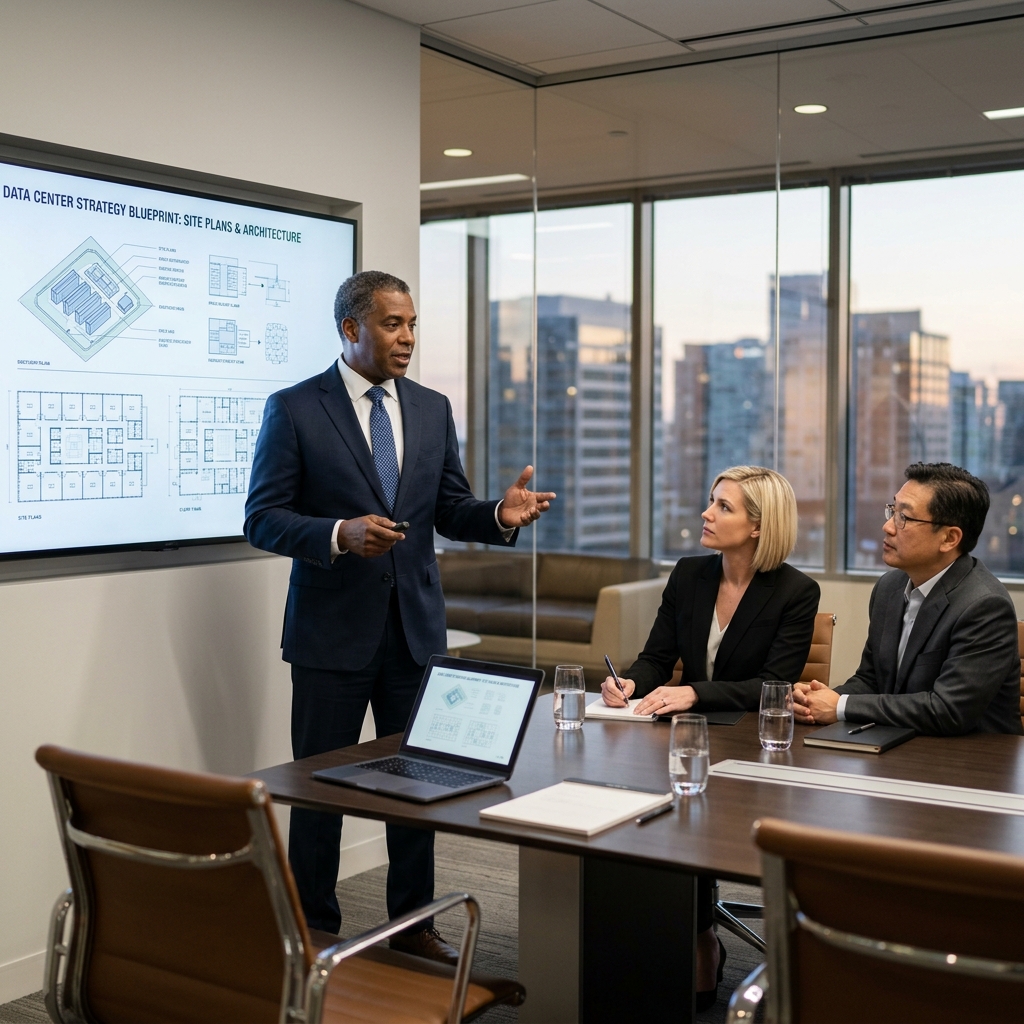
Every phase concludes with documented deliverables and stakeholder sign-off.
We begin with a deep-dive into your objectives, constraints, and stakeholder expectations. Whether you are planning a new facility, optimising an existing one, or evaluating a potential acquisition - we define the exact scope, success criteria, and engagement structure before any work begins.
Engagement charter, stakeholder map, and scope document
Comprehensive analysis of site conditions, power infrastructure, cooling requirements, environmental risks, regulatory landscape, and financial viability. For existing facilities, this includes a full capacity audit and operational health check.
Feasibility report with risk-rated recommendations and go/no-go evaluation
We provide independent oversight of the facility design - electrical, mechanical, cooling, network, and security architecture. We challenge vendor specifications, validate capacity calculations, and ensure the design supports your growth trajectory without over-engineering.
Design review report, vendor evaluation matrix, and optimisation recommendations
During construction, we serve as the owner's technical representative - monitoring progress, validating quality, managing scope changes, and ensuring the facility is built to specification. We conduct independent commissioning verification before handover.
Monthly progress reports, quality audit results, and commissioning certification
Before the facility goes live, we validate that the operational model is in place - staffing plans, monitoring systems, maintenance schedules, incident response procedures, and vendor SLAs. This phase prevents the post-commissioning instability that plagues most new facilities.
Operations manual, NOC setup validation, and readiness sign-off
Post-commissioning, we provide periodic reviews of facility performance against target KPIs - PUE trends, capacity utilisation, maintenance effectiveness, and operational cost benchmarks. We identify optimisation opportunities as workloads evolve.
Quarterly performance report with actionable improvement roadmap
The Measurable Difference
These are the outcome metrics we track and report. No vague promises - measurable KPIs agreed before the engagement begins.
Energy Efficiency
PUE of 1.6–2.0. No measurement framework. Cooling runs at maximum regardless of actual load. Energy bills treated as fixed costs.
PUE target of 1.1–1.3. Continuous monitoring with automated load-matching. Energy cost treated as a controllable variable with clear reduction targets.
Commissioning Timeline
Delays of 3–9 months beyond original plan. No stage-gate governance. Issues discovered at final testing that should have been caught in design.
Structured milestone tracking with independent verification. Issues identified and resolved during design phase. Commissioning within planned timeline.
Capacity Utilisation
Facilities operating at 30–50% capacity with stranded power and cooling. No visibility into which resources are available versus allocated.
Capacity management framework showing real-time utilisation. Stranded capacity identified and recovered. Target utilisation above 70% within 18 months.
Downtime Risk
Reactive maintenance. Failures discovered when they cause outages. No predictive analytics. Average recovery measured in hours.
Predictive maintenance powered by AIOps. Potential failures identified days before impact. Target: zero unplanned downtime events per quarter.
Investor Confidence
No standardised KPIs. Board receives anecdotal updates. ROI timeline unclear. Milestone accountability is informal.
Pre-agreed KPI dashboard with quarterly reporting. Clear ROI timeline mapped to commissioning and occupancy milestones. Independent verification of progress.
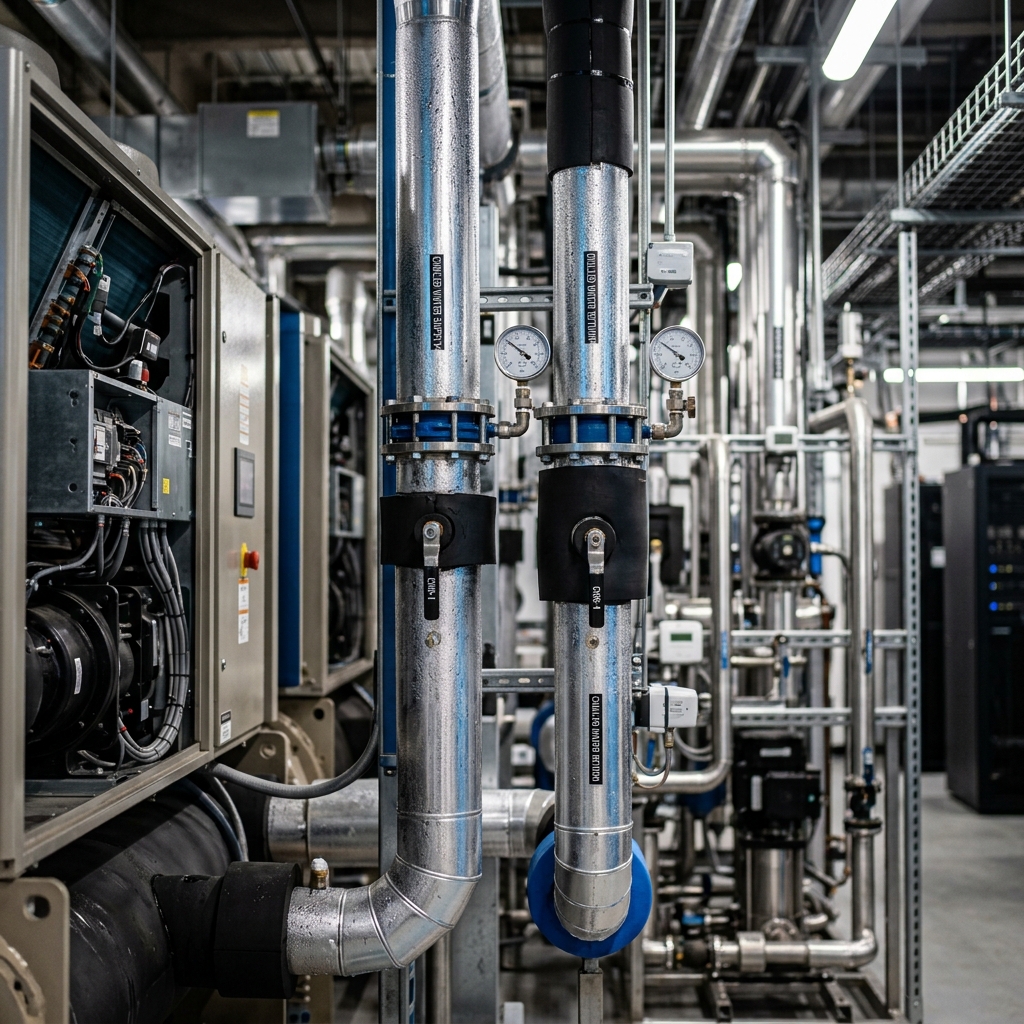
Who This Is For
Whether you are investing in a new facility, modernising existing infrastructure, or optimising operations - the challenges are different, but the need for independent technical oversight is the same.
Common Challenge
Evaluating DC investment opportunities without independent technical validation. Relying on developer projections without verification of site feasibility, design quality, or operational readiness.
What You Need
Independent technical due diligence, feasibility validation, and ongoing construction oversight that protects the investment from hidden risks.
Common Challenge
Managing aging on-premise server infrastructure that cannot support modern AI, cloud, and analytics workloads. Facing board pressure to modernise without clear cost-benefit analysis.
What You Need
A modernisation roadmap that quantifies the ROI of upgrading existing facilities versus migrating to colocation or cloud - with implementation oversight.
Common Challenge
Expanding capacity under intense time pressure while maintaining Tier III/IV reliability standards. Managing PUE optimisation and sustainability targets across multiple facilities.
What You Need
Scalable consulting that supports rapid expansion - from site selection through commissioning - without compromising quality or efficiency targets.
Common Challenge
Operating facilities designed for low-density workloads that are now overheating, running out of power capacity, or failing to meet customer SLAs.
What You Need
A practical modernisation plan that recovers stranded capacity, retrofits cooling for high-density compute, and extends the productive life of existing infrastructure.
Why Cypraon for Data Centres
Data centre consulting is only as good as the independence and depth of the firm providing it. Here is what sets our approach apart.
We do not sell equipment, software, or construction services. Our recommendations are based entirely on what is right for your facility - not on commissions or partnership agreements.
From feasibility analysis through commissioning to operational optimisation - one consulting partner across the entire DC lifecycle. No handoff gaps between phases.
Your engagement is led by the same senior consultant from discovery to delivery. You are never handed off to junior staff after the contract is signed.
Every engagement starts with pre-agreed KPIs - PUE targets, timeline commitments, capacity benchmarks. We are accountable to results, not hours billed.
Green DC strategy is integrated into every engagement - not treated as an optional add-on. Every recommendation considers energy efficiency, carbon impact, and ESG reporting requirements.
Every engagement is protected by a formal NDA. Your site plans, capacity data, investment strategy, and commercial details remain strictly confidential.
Deep understanding of Indian power grid realities, regulatory landscape, climate considerations, and supply chain dynamics - combined with global best practices.
We do not build, operate, or invest in data centres. Our only interest is the right outcome for your facility. This independence is non-negotiable.
Investor & Stakeholder FAQ
Direct, honest answers to the most common questions from investors, CIOs, and facility operators considering independent DC consulting.
70%
of DC projects that skip independent feasibility analysis experience significant cost overruns or commissioning delays. The consulting investment prevents this.
"We already have an EPC contractor managing our DC project."
Good. An EPC contractor builds the facility. A DC consultant ensures the facility is designed correctly before construction begins, monitors quality during the build, and validates operational readiness before handover. The two roles are complementary - and keeping them independent is how you protect the investment.
"We are not building a new DC - we are modernising an existing one."
That is exactly where we add the most value. Legacy modernisation requires a careful review of what can be upgraded in place, what needs to be replaced, and how to sequence the work without disrupting operations. This is a consulting problem, not a construction problem.
"How do you measure ROI on DC consulting?"
We define measurable KPIs at the start of every engagement - PUE improvement targets, commissioning timeline adherence, capacity recovery percentages, downtime reduction metrics. These are tracked and reported quarterly. The ROI of avoiding one major design error or commissioning delay typically exceeds the entire consulting engagement cost.
"We do not have a technical team to work with a consultant."
You do not need one. Our role is to be your technical representative. We translate complex DC engineering decisions into clear business terms for your leadership team, and we interface directly with your vendors, contractors, and operators on the technical details.
"Is this relevant for smaller facilities - under 1 MW?"
Yes. In fact, smaller facilities face higher risk from design errors because there is less margin for waste. A 500 kW facility with a PUE of 1.8 instead of 1.3 loses proportionally more of its operating budget to energy waste than a 10 MW hyperscale facility. The principles are the same; the consulting scope adjusts to the facility size.
"What happens after the consulting engagement ends?"
We design every engagement to transfer knowledge to your team. All deliverables - feasibility reports, design reviews, operations manuals, KPI dashboards - are yours permanently. We remain available for quarterly reviews and ad-hoc advisory without requiring a continuous retainer.
Your Next Step
Schedule a free 30-minute data centre discovery session. We will listen to your project, ask the right questions, and give you an honest evaluation of where independent consulting can - and cannot - add value.
All discovery sessions are covered by our confidentiality policy. Your site plans, investment details, and business strategy are never shared externally.