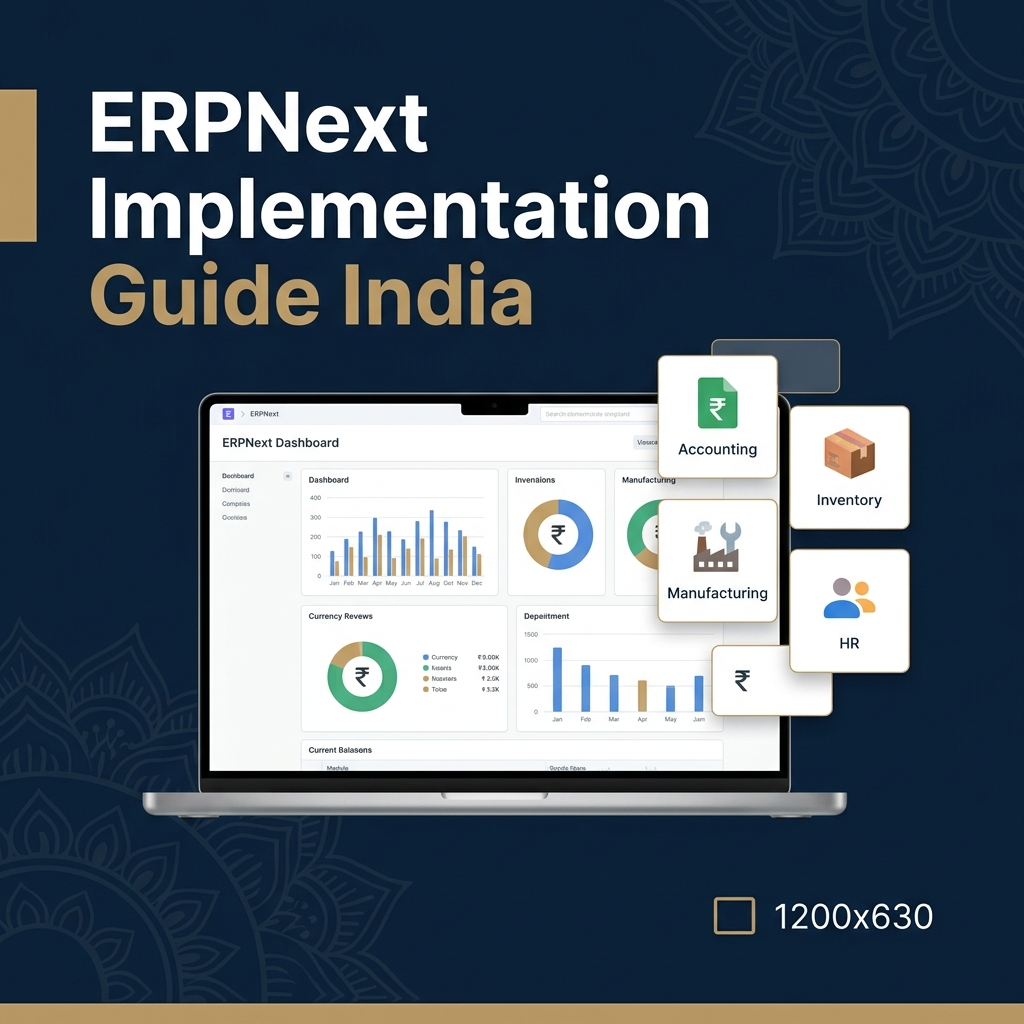

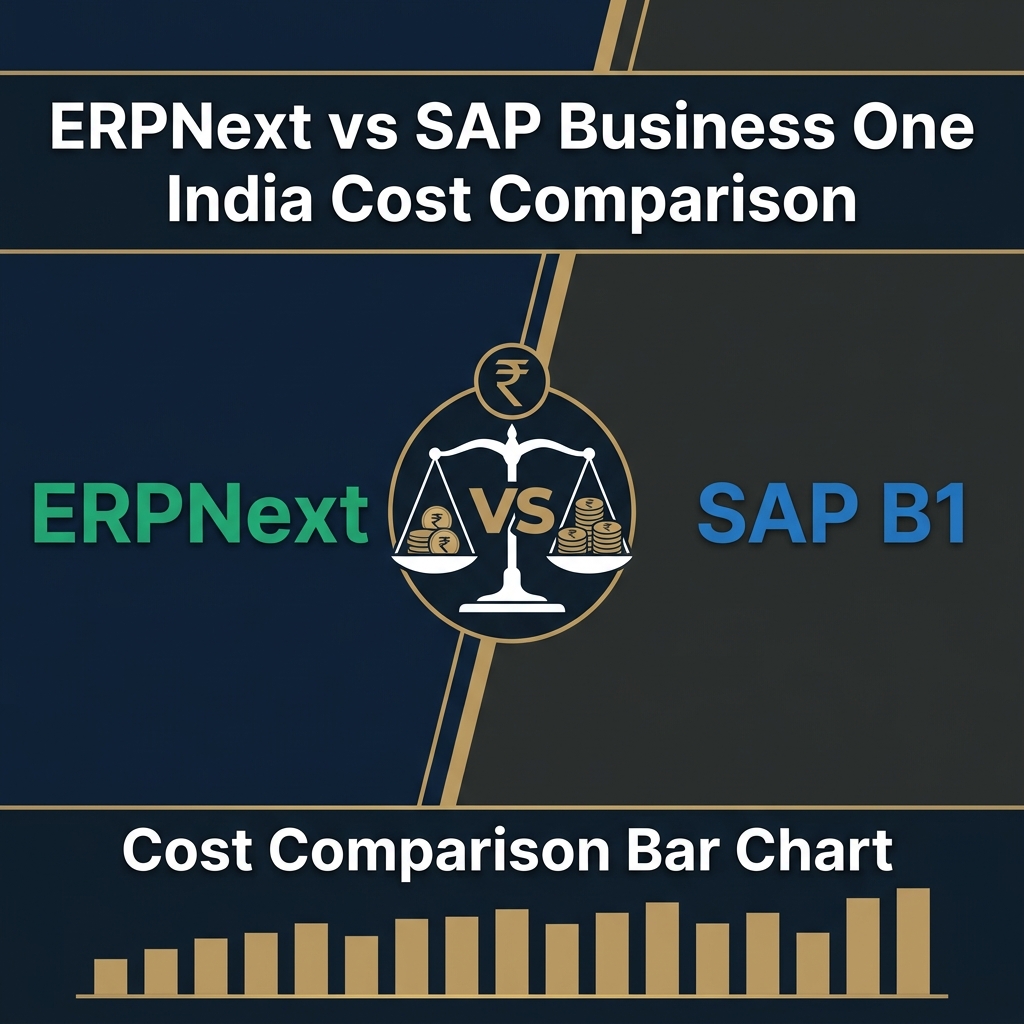
Every Indian SME considering an ERP eventually faces the same choice: the perceived safety of SAP Business One, or the open-source flexibility of ERPNext. Both can work. Both can fail. The right choice depends on your business complexity, technical capacity, budget, and growth trajectory — not on which brand name sounds more credible to your board.
At Cypraon, we have implemented both ERPNext and SAP Business One for Indian companies. This comparison is based on real engagement data, not vendor marketing material.
Total Cost of Ownership: The 5-Year Reality
SAP Business One
SAP Business One licensing in India is sold per user, with two models: perpetual license (one-time fee + annual maintenance) and subscription. Perpetual license costs approximately ₹1.5–2.5 lakh per named user (Professional) or ₹80,000–1.2 lakh per Limited user, plus 20% annual maintenance. For a 30-user company, the perpetual license alone is ₹25–40 lakh. Implementation by an SAP partner typically adds ₹15–40 lakh depending on scope and customization. Annual support contracts add ₹5–8 lakh. Over 5 years, a typical 30-user SAP B1 deployment costs ₹75–1.5 crore in total.
ERPNext
ERPNext's software is free and open-source. Costs are: implementation (₹5–25 lakh depending on complexity), hosting (₹50,000–3 lakh annually for Frappe Cloud or self-hosted), and support/maintenance (₹1–4 lakh annually). Over 5 years, a comparable 30-user ERPNext deployment costs ₹15–50 lakh in total — a 3–5x cost advantage.
The key question is whether SAP B1's additional capabilities justify the premium for your specific business. For most Indian SMEs with under 500 employees, the answer is no. For companies with complex multi-entity global reporting or specific regulated industry requirements, SAP B1's enterprise features may justify the cost.
Indian Compliance: Where ERPNext Has a Real Advantage
SAP Business One's India localisation (built by SAP India partners) covers GST and TDS but requires frequent patch updates to keep pace with GST Council rule changes. E-invoicing and e-waybill integration exists but requires separate add-ons from SAP partners. Updates to comply with new government mandates often lag by weeks, requiring manual workarounds.
ERPNext's India compliance is maintained by Frappe Technologies as a core product responsibility, not a localisation add-on. GST rule changes, e-invoicing portal updates, and payroll statutory updates are typically released within days of government notification. For Indian companies where compliance timeliness is critical (particularly in BFSI and manufacturing), this is a meaningful operational advantage.
Manufacturing Capability: Closer Than You Think
SAP Business One has historically been stronger in manufacturing with better production order management, MRP, and BOM handling. ERPNext has closed this gap significantly. ERPNext's Manufacturing module now supports multi-level BOMs, work orders, job cards, capacity planning, and subcontracting — sufficient for most Indian discrete and process manufacturers.
Where SAP B1 still leads: complex multi-plant production planning, highly detailed shop-floor control (MES-level), and integration with advanced PLM systems. Where ERPNext leads: flexibility to add custom shop-floor tracking without paying SAP partner development rates.
Customization: ERPNext by a Wide Margin
SAP Business One customization requires SAP SDK development (Visual Studio-based, Windows-only), proprietary database schema knowledge, and certified SAP partner developers. Simple customizations cost ₹2–5 lakh; complex ones cost significantly more. Each SAP B1 version upgrade requires testing and potential redevelopment of customizations.
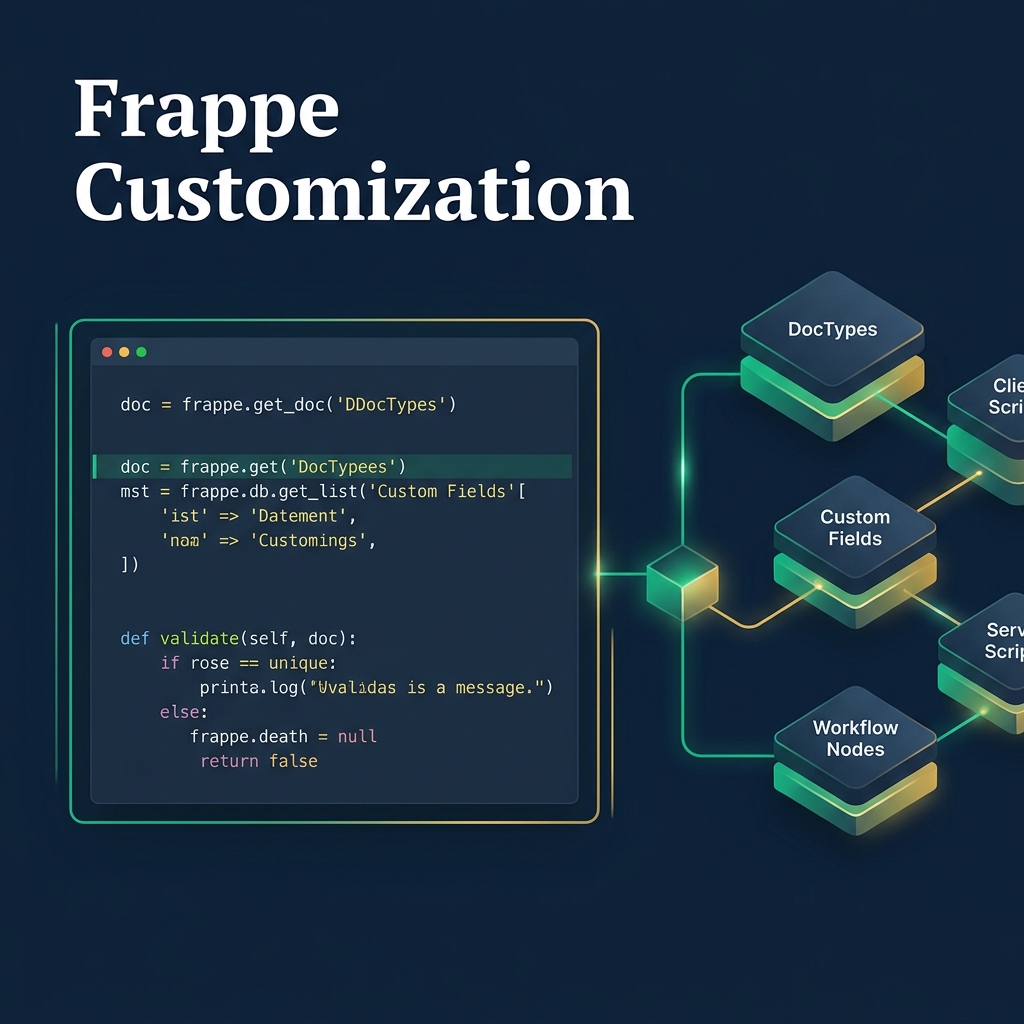
ERPNext customization via Frappe (Custom Fields, Scripts, Custom DocTypes) is done in standard Python and JavaScript. Any developer familiar with Python can work on Frappe customizations. Simple customizations can be done in hours; moderate complexity takes days to weeks. Custom apps are version-upgrade-resilient by design.
Implementation Timeline
SAP Business One implementations for 30–100 user companies in India typically take 6–18 months, primarily because of the complexity of configuration, the need for SAP-certified consultants, and the weight of SAP's implementation methodology. Go-live delays of 50% beyond the original timeline are common.
ERPNext implementations for equivalent-scope deployments typically take 3–9 months with a phased approach. The Frappe framework's flexibility reduces configuration complexity, and the open-source community provides more available resources for troubleshooting.
When to Choose ERPNext
ERPNext is the right choice when: your company has 20–500 employees; budget constraints make SAP's TCO prohibitive; Indian statutory compliance is a priority; you need customization flexibility to match specific industry workflows; and you have access to a competent Frappe implementation partner (like Cypraon).
When SAP Business One May Be Right
SAP B1 may be justified when: you have subsidiaries in multiple countries requiring consolidated reporting in non-Indian currency; your industry has specific SAP-integrated supply chain partners (common in automotive Tier-1/Tier-2); your board has a governance requirement for a "big 4" ERP brand; or you are positioning for an IPO or acquisition where buyers expect SAP in the tech stack.
Our Recommendation
For the vast majority of Indian SMEs and mid-market companies, ERPNext on Frappe delivers better ROI, faster implementation, superior Indian compliance, and greater flexibility than SAP Business One — at a fraction of the cost. The narrative that SAP is "enterprise-grade" and ERPNext is for "small companies" is outdated. ERPNext runs 50,000+ companies globally, including manufacturers with ₹500+ crore revenue.
If you are evaluating ERP options, we recommend doing a structured requirements analysis before choosing a platform — not choosing a platform and then trying to justify it. Cypraon offers a free ERP readiness consultation to help Indian companies make this decision with data, not assumptions.