
ERPNext, built on the Frappe framework, has emerged as the most compelling ERP option for Indian SMEs and mid-market companies. It is open-source, built with Indian compliance in mind (GST, TDS, e-invoicing, e-waybill), actively maintained, and — when implemented correctly — delivers enterprise-grade capabilities at a fraction of the cost of SAP or Oracle.
But "implemented correctly" is the critical qualifier. At Cypraon, we have worked with companies that chose ERPNext for the right reasons and achieved transformational results, and we have rescued implementations that failed — not because ERPNext was wrong, but because the implementation approach was wrong. This guide covers what we know works.
Is ERPNext Right for Your Business?
ERPNext is an excellent fit when: your company has 20–500 employees and annual revenue between ₹5 crore and ₹500 crore; you need strong manufacturing, trading, or service-sector functionality; Indian statutory compliance (GST, TDS, payroll) is a core requirement; you want the flexibility to customise without paying SAP-level consulting fees; and you have a technical team member or access to a Frappe-certified implementation partner.
ERPNext is less suited when: you have extremely complex multi-national reporting requirements across 10+ countries; your industry has highly specialised regulatory requirements (pharmaceutical GMP, for example) that need deep out-of-box compliance; or your organisation's IT governance requires a vendor with an enterprise SLA and formal support contract.
Module Selection: What to Implement First
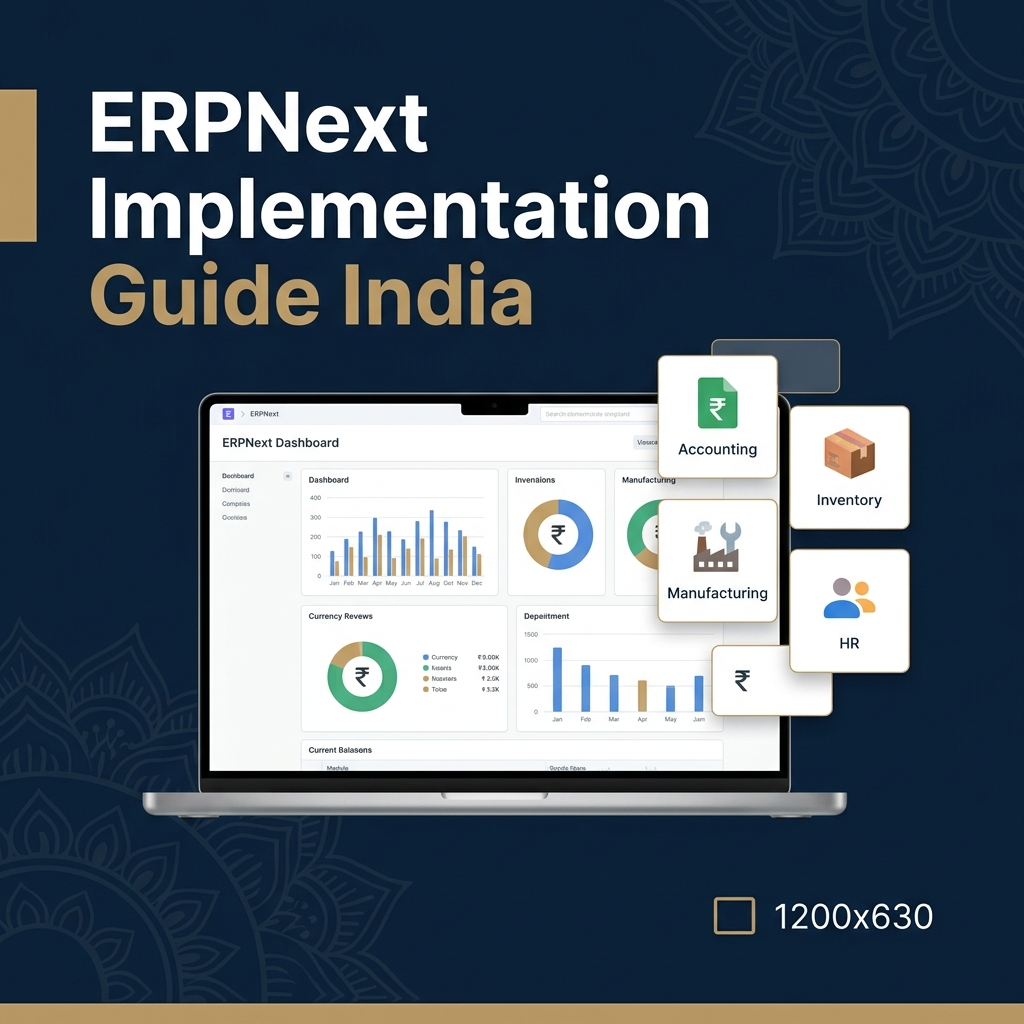
One of the most common ERPNext implementation failures is trying to go live with everything at once. The correct approach is phased implementation, starting with core modules and adding complexity in subsequent phases.
Phase 1 (Months 1–3): Accounts (General Ledger, Accounts Payable, Accounts Receivable), GST compliance, basic Buying and Selling. These modules have the clearest business ROI and the most standardised processes — they are the right foundation.
Phase 2 (Months 4–6): Inventory Management, Purchase Orders, Sales Orders, and if applicable, Manufacturing (Work Orders, BOMs, Production Planning). These require more process alignment but deliver significant operational efficiency.
Phase 3 (Months 7–12): HR and Payroll, Project Management, CRM, Quality Management, and any custom modules specific to your industry. By this phase, your team has ERP discipline, making complex modules far easier to adopt.
Data Migration: Where Most Implementations Fail
Data migration is consistently the highest-risk activity in any ERP implementation. The three most common failure modes are: migrating dirty data (duplicates, incomplete records, inconsistent formats) into the new system; migrating historical transactional data that is not needed and creates confusion; and attempting to migrate everything in one cut-over weekend without a tested rollback plan.
Our approach: clean master data before migration (customers, suppliers, items, chart of accounts), validate opening balances rigorously, migrate only the last 2–3 years of historical transactions if needed, and run parallel systems for at least one full accounting period before final cutover.
Frappe Customization: Power and Pitfall
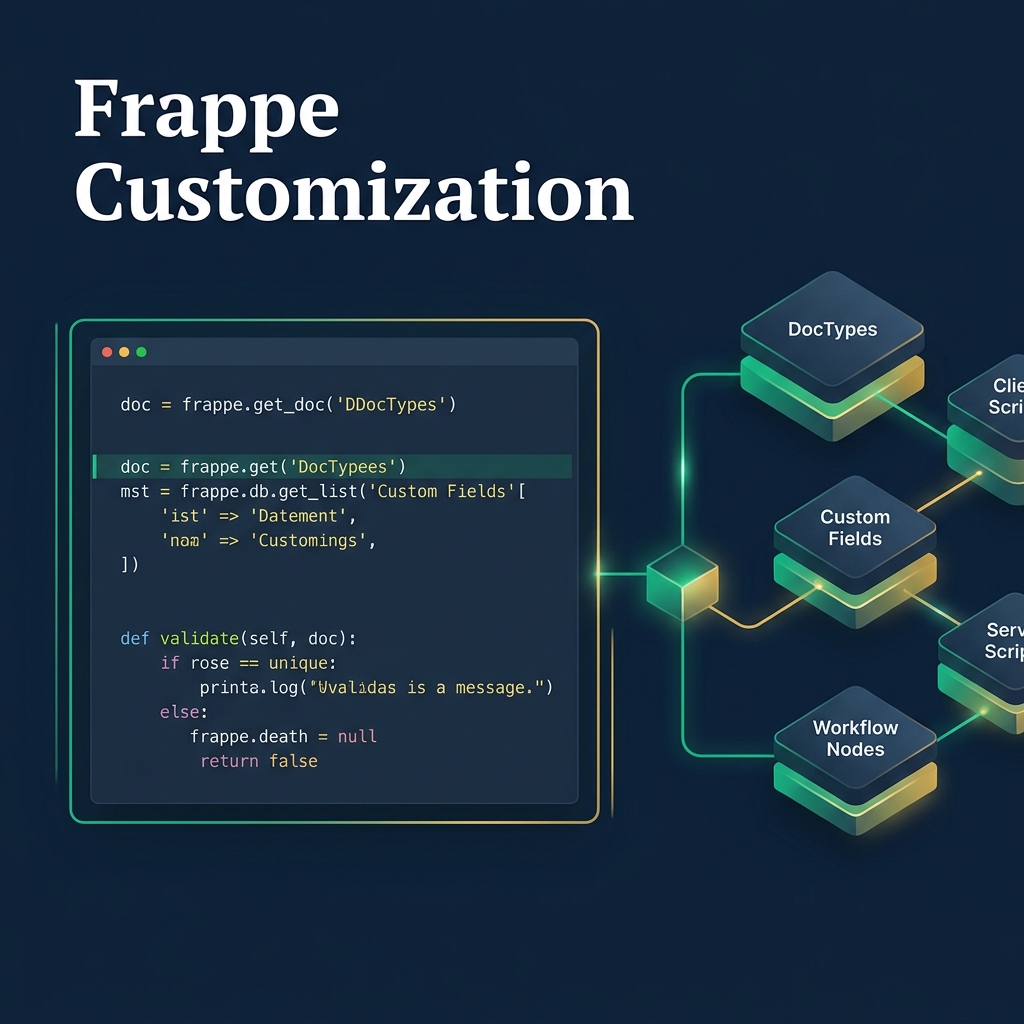
One of ERPNext's greatest strengths is the Frappe framework's customization capability. Custom DocTypes, custom fields, server-side scripts, and client-side scripts allow you to adapt ERPNext to your business processes rather than adapting your processes to the software.
However, customization has a cost — primarily the maintenance burden when ERPNext versions update. Our principle at Cypraon: customise only when the standard workflow genuinely cannot serve the business requirement, always prefer Custom Fields and Custom Scripts over core framework modifications, document every customization with a business justification, and test all customizations before each major ERPNext version upgrade.
The Frappe framework also supports custom apps — standalone modules that extend ERPNext without modifying its core. For complex industry-specific requirements, a custom Frappe app is often the right solution over deeply patching the core.
Indian Compliance: What ERPNext Gets Right
ERPNext's India compliance is one of its strongest selling points and a major reason Indian companies should consider it over generic international ERPs:
GST: ERPNext supports all GST transaction types — CGST/SGST/IGST split, reverse charge mechanism, composition scheme, input tax credit tracking, and direct GSTR generation. E-Invoicing (IRN generation) and E-Waybill generation are built in and regularly updated as GST Council rules change.
TDS: Form 26Q, TDS returns, and TDS certificates are supported. TDS categories, thresholds, and applicable rates are configurable.
Payroll: Indian payroll with PF, ESI, professional tax (state-wise), and gratuity calculations. Form 16 and PF ECR generation are supported.
Banking: Bank reconciliation with automatic matching and support for major Indian bank statement formats.
Typical ERPNext Implementation Cost in India
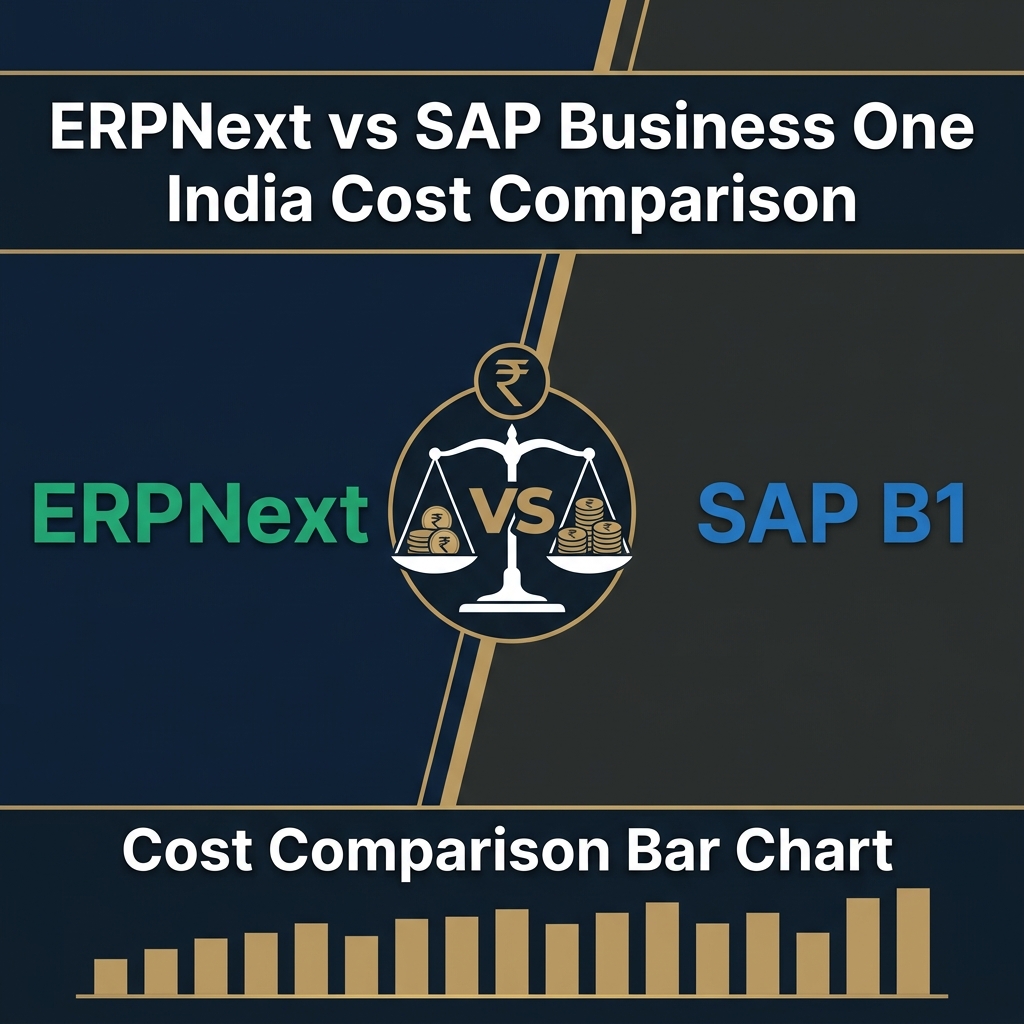
Implementation cost varies significantly based on scope, customization, and the implementation partner. As a guide: a basic ERPNext implementation for a 30–50 employee company with minimal customization (accounts, buying, selling, inventory) typically costs ₹3–8 lakh in implementation fees plus ₹50,000–1.5 lakh annually for hosted ERPNext cloud or self-hosted infrastructure. A mid-market implementation with manufacturing, HR, and moderate customization typically costs ₹10–25 lakh in implementation fees. The ERPNext software itself is free (open-source); you pay for implementation, customization, and hosting — not for the license.
What to Ask an ERPNext Implementation Partner
Before engaging any ERPNext consultant, ask: How many ERPNext implementations have you completed in my industry? Can you provide references from clients with similar complexity? How do you handle the transition from legacy systems? What is your process for user training and adoption? How do you manage support after go-live? And critically: are you a Frappe-certified implementation partner?
Cypraon specialises in ERPNext implementations for Indian manufacturing, trading, and services companies. Our engagements follow a structured methodology that has consistently delivered go-lives within timeline and budget — contact us for a free discovery call.