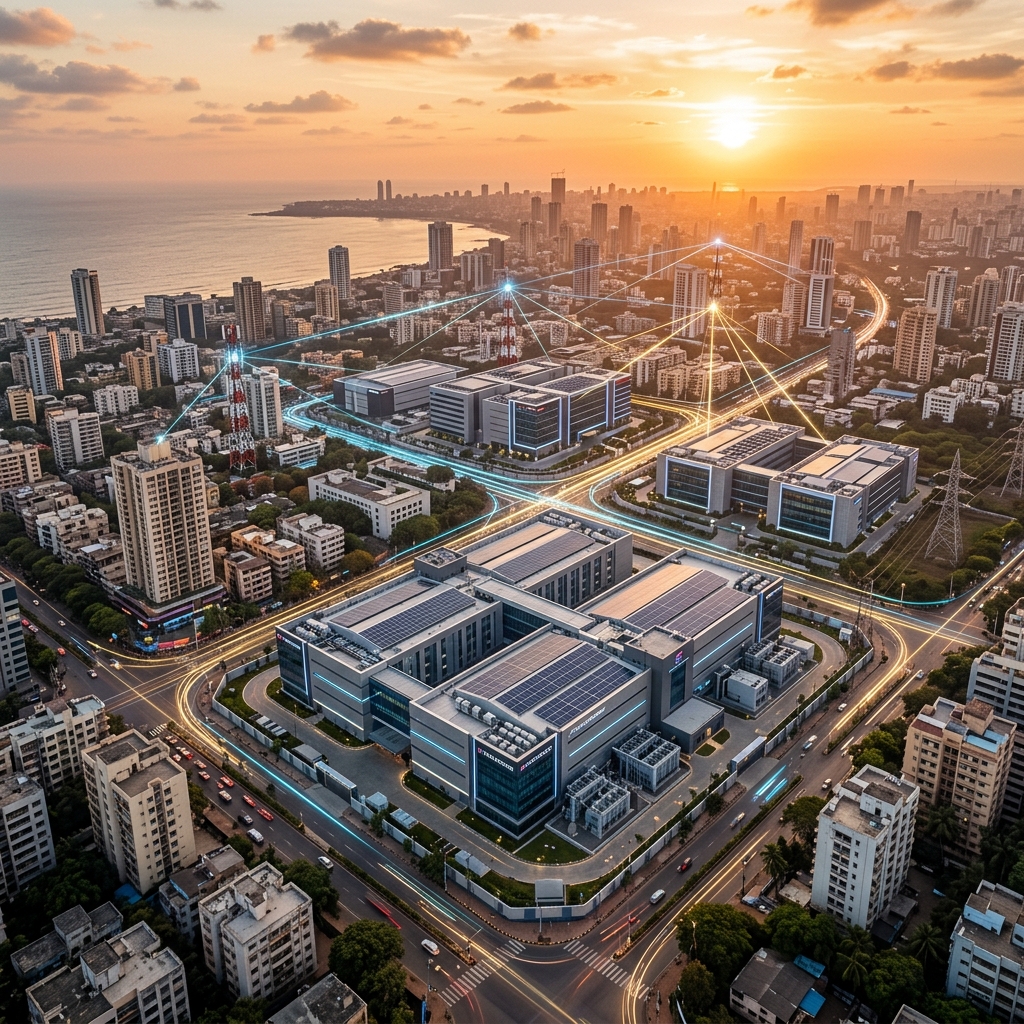

Data center site selection is arguably the most consequential decision in a facility investment. A poor site choice cannot be remediated by excellent construction or operations - the constraints are permanent. Power grid limitations, fibre latency penalties, flood exposure, and regulatory barriers are baked into the location, and their costs compound over the 15–25 year life of a typical facility.
Yet site selection in India is frequently driven by a single variable: land cost. Developers acquire cheap land in locations where power is unreliable, fibre connectivity requires expensive last-mile builds, water for cooling is scarce, and local regulations create permitting delays that push commissioning timelines by months or years.
The 15-Factor Site Evaluation Framework
Power Infrastructure (Critical)
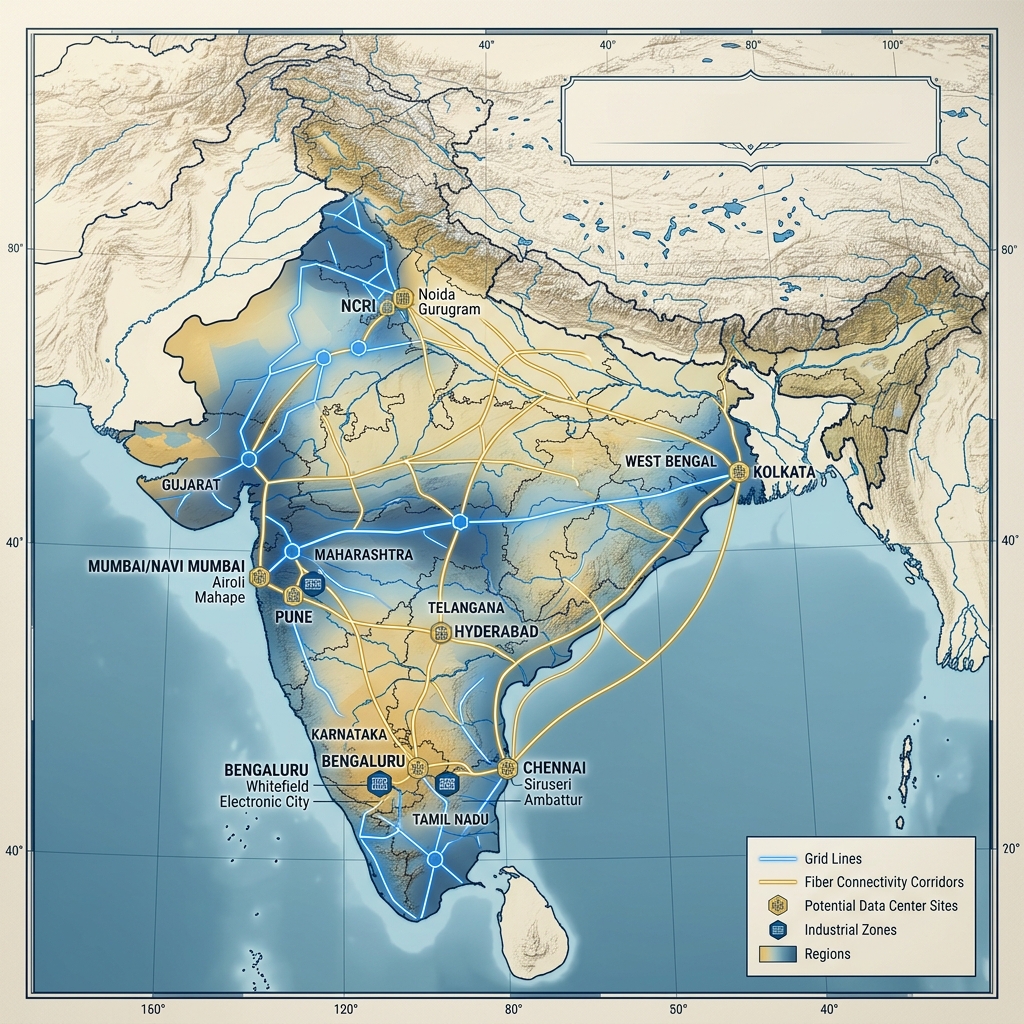
Power is the single most important site selection factor. Evaluate: grid reliability (measured in hours of unplanned outage per year), available capacity at the nearest substation, cost per unit across demand charge and energy charge components, renewable energy availability (solar/wind potential for on-site or nearby generation), and the utility's willingness to provide dedicated feeders for DC loads. In India, significant variation exists between state electricity boards - Gujarat, Maharashtra, and Karnataka offer relatively stable grid supply, while some northern states present higher reliability risk.
Fibre Connectivity
A data center without diverse, low-latency fibre connectivity is an expensive storage room. Evaluate: number of independent fibre providers serving the location, latency to the nearest internet exchange point, availability of dark fibre for dedicated enterprise connections, and planned fibre infrastructure in the vicinity. Submarine cable proximity is critical for international traffic-heavy use cases - Chennai and Mumbai are India's primary landing points.
Natural Disaster & Environmental Risk
India presents diverse natural disaster profiles by region. Evaluate: flood risk (particularly relevant for Mumbai, Chennai, and low-lying areas), seismic zone classification, cyclone exposure (coastal regions), and extreme heat exposure (which affects cooling system sizing and operating costs). A site in Seismic Zone IV or a flood-prone area requires significantly higher structural investment.
Water Availability
Cooling systems - particularly evaporative cooling and cooling towers - require significant water supply. In water-stressed regions, securing reliable water access is both an operational and regulatory challenge. Evaluate: local water table levels, municipal supply reliability, groundwater extraction permissions, and the feasibility of zero-liquid-discharge systems.
Regulatory & Permitting
Indian data centers require multiple clearances: environmental clearance (for facilities above certain power thresholds), building permits, electrical safety certifications, fire safety clearances, and industry-specific permissions. The time to obtain these clearances varies dramatically by state and municipality - a factor that directly impacts commissioning timeline and, therefore, time-to-revenue.
Financial Modelling: Beyond Land Cost
Land cost is typically 5–10% of total facility investment. The variables that actually determine long-term financial performance are: power cost per unit (the largest operating expense, typically 40–60% of OpEx), cooling efficiency achievable at the location (determined by climate), fibre connectivity cost (one-time and recurring), water cost and availability, local labour cost and availability for operations, and state-specific tax incentives or subsidies.
A site with 20% cheaper land but 15% higher power costs and 30% higher cooling costs will significantly underperform a premium-land location with better infrastructure - over a 15-year facility life, the infrastructure advantages compound while the land savings are one-time.
The Role of Independent Feasibility Analysis
Site selection decisions are typically made by real estate teams, financial analysts, or developer sales teams - none of whom have the technical depth to evaluate power infrastructure quality, cooling system implications of the local climate, or fibre connectivity adequacy. Independent technical feasibility analysis brings the engineering perspective that prevents costly location mistakes.